

Microbiology - Diseases of the Digestive System
- Microbiology
- Texas A&M University
- 15 pages
- Shared March 2026
Preview 5 of 15 pages
See the first 5 pages exactly as they appear in the document.
Page 1 Read page 1 as text
Study Guide Microbiology – Diseases of the Digestive System 1. Protozoal Diseases of the Digestive System Protozoa are single - celled organisms that can infect the digestive system when contaminated food or water is consumed. These infections often cause diarrhea and abdominal discomfort and can be especially dangerous for people with weakened immune systems. B elow are the most important protozoal diseases of the digestive tract. 1.1 Amoebic Dysentery Amoebic dysentery is caused by the amoeba Entamoeba histolytica . In the environment, this protozoan exists in a cyst form , which allows it to survive outside the body. Humans become infected by eating food or drinking water contaminated with these cysts. Once inside the body, the cysts release trophozoites , which are the active, feeding forms. These trophozoites invade the intestinal lining , causing tissue damage. From there, they may enter the bloodstream and spread to other organs, especially the liver and lungs . Infected individuals pass cysts in their stool and may remain carriers for long periods , even if symptoms are mild or absent. Treatment is usually effective with the drug metronidazole . 1.2 Giardiasis Giardiasis is caused by Giardia lamblia , a protozoan that moves using flagella. The organism enters the body in its cyst form through contaminated food or water. In the intestine, the cysts release trophozoites, which attach to the intestinal wall and multiply. Symptoms commonly include: • Foul - smelling, watery diarrhea • Abdominal pain • Intestinal discomfort People who enjoy outdoor activities such as hiking, backpacking, and camping are at higher risk. This is because untreated mountain streams may contain Giardia cysts from wild animals. The infection is treated with metronidazole , which is usually very effective.
Page 2 Read page 2 as text
Study Guide 1.3 Balantidiasis Balantidiasis is caused by Balantidium coli , a ciliated protozoan . As with other protozoal infections, the organism enters the body as a cyst . Inside the intestine, trophozoites emerge and may invade the intestinal tissue. Symptoms include: • Persistent diarrhea • Blood and pus in the stool • Long - lasting digestive problems People with balantidiasis often become long - term carriers . Treatment with metronidazole is commonly used. 1.4 Cryptosporidiosis Cryptosporidiosis is caused by species of Cryptosporidium , including C. parvum and C. coccidi . These organisms invade the intestinal epithelial cells and cause a mild form of gastroenteritis in healthy individuals. Symptoms include: • Abdominal pain • Watery diarrhea In people with AIDS or other immune system disorders , the disease can become extremely severe. The diarrhea may be massive and potentially fatal . At present, no effective treatment is known. The disease is mainly spread through contaminated water , and many standard water purification methods do not eliminate the organism. Because of this, improved water treatment techniques are currently being explored. Key Takeaway Protozoal diseases of the digestive system are usually spread through contaminated food or water. While some infections cause mild discomfort, others can lead to serious illness, especially in immunocompromised individuals. Safe drinking water, proper hygi ene, and timely treatment are essential for prevention and control.
Page 3 Read page 3 as text
Study Guide 2. Parasitic Diseases of the Digestive System Parasitic diseases of the digestive system are most often caused by worms , also known as helminths . These parasites usually live and multiply in the intestines. When the number of worms becomes large, symptoms of disease begin to appear. Poor sanitation, contaminated food and water, and lack of hygiene greatly increase the risk of these infections. 2.1 Pinworm Disease Pinworm disease is caused by a small roundworm called Enterobius vermicularis . Infection occurs when pinworm eggs are swallowed , often through contaminated hands, food, or objects. After the eggs hatch, adult female worms lay eggs near the anus , which causes itching. This disease is most common in young children , especially in crowded or daycare settings. Several medications are available and effective for treating pinworm infections. 2.2 Roundworm Disease Roundworm disease is caused by Ascaris lumbricoides . People become infected by ingesting roundworm eggs in contaminated food or water. Once inside the body, the larvae: 1. Hatch in the intestine 2. Burrow through the intestinal wall 3. Enter the bloodstream and travel to the lungs From the lungs, the worms are coughed up, swallowed, and returned to the digestive system, where they mature. Heavy infections can cause: • Respiratory distress • Intestinal obstruction
Page 4 Read page 4 as text
Study Guide 2.3 Hookworm Disease Hookworm disease is caused by two species: • Ancylostoma duodenale (Old World hookworm) • Necator americanus (New World hookworm) Unlike many other parasites, hookworm larvae enter through the skin , usually through bare feet. After entering the body, the larvae travel: • From the bloodstream to the lungs • Then are coughed up and swallowed • Finally reaching the intestines In the intestine, hookworms attach to the intestinal lining using hooks and feed on blood . This leads to: • Anemia • Fatigue • Weakness Hookworm disease is common in areas where people walk barefoot . 2.4 Strongyloidiasis Strongyloidiasis is caused by the roundworm Strongyloides stercoralis . The larvae penetrate the skin and follow a similar path as hookworms, eventually reaching the digestive system. Heavy infestations can cause: • Large numbers of worms • Intestinal blockage In immunocompromised individuals , the worms may invade the intestinal wall, making the disease more severe and dangerous. 2.5 Whipworm Disease Whipworm disease is caused by Trichuris trichiura , named for its whip - shaped body .
Page 5 Read page 5 as text
Study Guide Infection occurs when eggs are swallowed in contaminated food or water. Inside the intestine: • Eggs hatch into adults • Adults produce eggs that leave the body in feces Large numbers of whipworms cause: • Intestinal irritation • Inflammation • Symptoms of obstruction 2.6 Trichinosis Trichinosis is caused by Trichinella spiralis . Humans become infected by eating undercooked pork that contains cysts in muscle tissue. After ingestion: • Worms mature in the intestine • Larvae enter the bloodstream • Cysts form in muscle tissues Severe pain occurs when large numbers of worms invade: • Rib muscles • Heart muscle • Diaphragm • Lungs Proper cooking of pork is the most important way to prevent trichinosis. 2.7 Taeniasis (Tapeworm Infection) Taeniasis is caused by tapeworms , which are flatworms. Two species commonly infect humans: • Taenia solium (pork tapeworm) • Taenia saginata (beef tapeworm)
10 more pages in the full document
Unlock it once and it stays in your library, ready to chat with or turn into flashcards.
Unlock the full documentMore Microbiology study materials
See all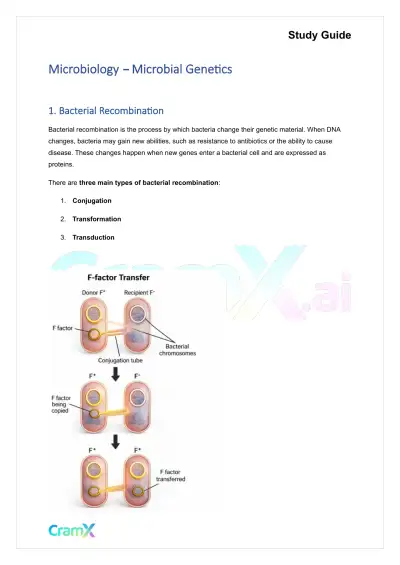 Quick Guides
Microbiology - Microbial Genetics
Microbiology
13 pagesMar 2026 Quick Guides
Microbiology - DNA and Gene Expression
Microbiology
15 pagesMar 2026 Quick Guides
Microbiology - Microbial Metabolism
Microbiology
16 pagesMar 2026 Quick Guides
Microbiology - Food Microbiology
Microbiology
13 pagesMar 2026 Quick Guides
Microbiology - Prokaryotes and Eukaryotes
Microbiology
13 pagesMar 2026 Quick Guides
Microbiology - Microbial Cultivation and Growth
Microbiology
15 pagesMar 2026 Quick Guides
Microbiology - The Chemical Basis of Microbiology
Microbiology
13 pagesMar 2026 Quick Guides
Microbiology - Control of Microbial Growth
Microbiology
22 pagesMar 2026
Study this document with CramX
Once it is in your library, every tool can work from it.