

California: An Interpretive History 10th Edition Test Bank
- History
- 474 pages
- Shared May 2025
California: An Interpretive History 10th Edition Test Bank simplifies your exam prep with detailed solutions and a wide range of test questions.
Preview 16 of 474 pages
See the first 16 pages exactly as they appear in the document.
Page 1 Read page 1 as text
1 Student: ___________________________________________________________________________ 1. The Indians of California A. made virtually no attempt to explain the origins of California. B. developed a wide variety of creation stories. C. produced a state - wide consensus on the origins of California. D. failed to recognize the unlikelihood of agreement on matters as important as the origins of their world. 2. Earth scientists today explain the origins of California A. as a result of numerous massive earthquakes. B. by theories of thermal volcanism. C. by the theory of plate tectonics. D. as occurring extremely early in the geologic history of the world. 3. The movement of tectonic plates dramatically changed about 30 million years ago when the Pacific Plate began A. sliding past the North American Plate in a lateral motion. B. subducting beneath the North American Plate. C. moving upward to dislodge the overburden of rock and soil. D. sinking deeper into the Earth's molten core. 4. Accounts of devastating California earthquakes appear in A. the stories of California Indians. B. the earliest records of European settlers. C. the memories of many contemporary Californians. D. all of the above. 5. The land surface of California is A. larger than that of Alaska. B. larger than that of Texas. C. approximately 100 million acres. D. all of the above.
Page 2 Page 3 Read page 3 as text
6. The largest lowland area that fronts the ocean is the A. Los Angeles basin. B. San Francisco Bay area. C. northern coastal zone near the Oregon border. D. vast Santa Barbara Channel area. 7. Most of the surface of California is covered by A. deserts. B. mountains. C. lakes. D. valleys. 8. The state tree of California is the A. bristlecone pine. B. California live oak. C. coast redwood. D. eucalyptus. 9. The most productive agricultural region of California is the A. Great Central Valley. B. Los Angeles basin. C. San Francisco Bay region. D. Owens Valley. 10. European and American settlement of California was significantly retarded by A. the region's geographical remoteness. B. the steep eastern face of the Sierra Nevada. C. the vast southern deserts. D. all of the above. 11. Before the American period, agriculture in California was A. widespread among the Indians of northern California. B. the dominant activity of the Great Central Valley. C. aided by extensive Indian irrigation projects. D. exceedingly difficult.
Page 4 Read page 4 as text
12. California's climate could best be described as A. diverse. B. uniform. C. "Mediterranean." D. historically insignificant. 13. The political boundaries of the state A. outline the only area of winter rain and summer drought in North America. B. do not include a unique climatic region. C. bear no important relation to physical geography. D. outline the only area where winter rain almost exactly equals that of summer. 14. The Mediterranean climate zone of California A. is much like that found in the Alps of Switzerland. B. covers the area east of the Sierra Nevada. C. has relatively warm, dry summers and mild winters. D. keeps the state relatively immune to pollution. 15. The coastal region from Los Angeles to San Diego has a climate that can best be described as A. Mediterranean. B. semiarid or steppe. C. desert. D. subalpine. 16. Most earth scientists have accepted the theory of plate tectonics to explain the origins of California. True False 17. In Assembling California (1993), John McPhee argues that California was geologically formed very early in the history of the world. True False 18. The San Andreas Fault follows almost exactly the crest of the Sierra Nevada Mountains. True False
Page 5 Read page 5 as text
19. California has experienced major earthquakes only in the past few centuries. True False 20. In total land surface, California is the fifth largest of the states. True False 21. The lowest point in the United States is found in California's Death Valley. True False 22. The highest point in the United States outside of Alaska is found in California. True False 23. Rainfall in California tends to occur throughout the year in most of the state. True False 24. Winters in the Mediterranean climate zone are generally severe. True False 25. The southeastern third of the state has a microthermal climate. True False 26. While California occupies a large geographical area, its climatic conditions are remarkably uniform. True False 27. California's economic development has been significantly influenced by its rich natural resources. True False 28. Explain the plate tectonics theory of the origins of California.
Page 6 Read page 6 as text
29. Explain the myths and realities of California's climate. 30. To what extent does the sobriquet "sunny California" describe the realities of California's climate? 31. Explain the major varieties of California geography and climate. 32. Assess the interaction of geography and culture in California history.
Page 7 Read page 7 as text
33. Granting that both climate and geography have considerably influence on human culture, which one of these two conditions do you consider to be the more important in California's development? Why?
Page 8 Read page 8 as text
1 Key 1. The Indians of California A. made virtually no attempt to explain the origins of California. B. developed a wide variety of creation stories. C. produced a state - wide consensus on the origins of California. D. failed to recognize the unlikelihood of agreement on matters as important as the origins of their world. Rawls - Chapter 01 #1 2. Earth scientists today explain the origins of California A. as a result of numerous massive earthquakes. B. by theories of thermal volcanism. C. by the theory of plate tectonics. D. as occurring extremely early in the geologic history of the world. Rawls - Chapter 01 #2 3. The movement of tectonic plates dramatically changed about 30 million years ago when the Pacific Plate began A. sliding past the North American Plate in a lateral motion. B. subducting beneath the North American Plate. C. moving upward to dislodge the overburden of rock and soil. D. sinking deeper into the Earth's molten core. Rawls - Chapter 01 #3 4. Accounts of devastating California earthquakes appear in A. the stories of California Indians. B. the earliest records of European settlers. C. the memories of many contemporary Californians. D. all of the above. Rawls - Chapter 01 #4
Page 9 Read page 9 as text
5. The land surface of California is A. larger than that of Alaska. B. larger than that of Texas. C. approximately 100 million acres. D. all of the above. Rawls - Chapter 01 #5 6. The largest lowland area that fronts the ocean is the A. Los Angeles basin. B. San Francisco Bay area. C. northern coastal zone near the Oregon border. D. vast Santa Barbara Channel area. Rawls - Chapter 01 #6 7. Most of the surface of California is covered by A. deserts. B. mountains. C. lakes. D. valleys. Rawls - Chapter 01 #7 8. The state tree of California is the A. bristlecone pine. B. California live oak. C. coast redwood. D. eucalyptus. Rawls - Chapter 01 #8 9. The most productive agricultural region of California is the A. Great Central Valley. B. Los Angeles basin. C. San Francisco Bay region. D. Owens Valley. Rawls - Chapter 01 #9
Page 10 Read page 10 as text
10. European and American settlement of California was significantly retarded by A. the region's geographical remoteness. B. the steep eastern face of the Sierra Nevada. C. the vast southern deserts. D. all of the above. Rawls - Chapter 01 #10 11. Before the American period, agriculture in California was A. widespread among the Indians of northern California. B. the dominant activity of the Great Central Valley. C. aided by extensive Indian irrigation projects. D. exceedingly difficult. Rawls - Chapter 01 #11 12. California's climate could best be described as A. diverse. B. uniform. C. "Mediterranean." D. historically insignificant. Rawls - Chapter 01 #12 13. The political boundaries of the state A. outline the only area of winter rain and summer drought in North America. B. do not include a unique climatic region. C. bear no important relation to physical geography. D. outline the only area where winter rain almost exactly equals that of summer. Rawls - Chapter 01 #13 14. The Mediterranean climate zone of California A. is much like that found in the Alps of Switzerland. B. covers the area east of the Sierra Nevada. C. has relatively warm, dry summers and mild winters. D. keeps the state relatively immune to pollution. Rawls - Chapter 01 #14
Page 11 Read page 11 as text
15. The coastal region from Los Angeles to San Diego has a climate that can best be described as A. Mediterranean. B. semiarid or steppe. C. desert. D. subalpine. Rawls - Chapter 01 #15 16. Most earth scientists have accepted the theory of plate tectonics to explain the origins of California. TRUE Rawls - Chapter 01 #16 17. In Assembling California (1993), John McPhee argues that California was geologically formed very early in the history of the world. FALSE Rawls - Chapter 01 #17 18. The San Andreas Fault follows almost exactly the crest of the Sierra Nevada Mountains. FALSE Rawls - Chapter 01 #18 19. California has experienced major earthquakes only in the past few centuries. FALSE Rawls - Chapter 01 #19 20. In total land surface, California is the fifth largest of the states. FALSE Rawls - Chapter 01 #20 21. The lowest point in the United States is found in California's Death Valley. TRUE Rawls - Chapter 01 #21 22. The highest point in the United States outside of Alaska is found in California. TRUE Rawls - Chapter 01 #22
Page 12 Read page 12 as text
23. Rainfall in California tends to occur throughout the year in most of the state. FALSE Rawls - Chapter 01 #23 24. Winters in the Mediterranean climate zone are generally severe. FALSE Rawls - Chapter 01 #24 25. The southeastern third of the state has a microthermal climate. FALSE Rawls - Chapter 01 #25 26. While California occupies a large geographical area, its climatic conditions are remarkably uniform. FALSE Rawls - Chapter 01 #26 27. California's economic development has been significantly influenced by its rich natural resources. TRUE Rawls - Chapter 01 #27 28. Explain the plate tectonics theory of the origins of California. Answers will vary Rawls - Chapter 01 #28 29. Explain the myths and realities of California's climate. Answers will vary Rawls - Chapter 01 #29
Page 13 Read page 13 as text
30. To what extent does the sobriquet "sunny California" describe the realities of California's climate? Answers will vary Rawls - Chapter 01 #30 31. Explain the major varieties of California geography and climate. Answers will vary Rawls - Chapter 01 #31 32. Assess the interaction of geography and culture in California history. Answers will vary Rawls - Chapter 01 #32 33. Granting that both climate and geography have considerably influence on human culture, which one of these two conditions do you consider to be the more important in California's development? Why? Answers will vary Rawls - Chapter 01 #33
Page 14 Read page 14 as text
1 Summary Category # of Questions Rawls - Chapter 01 33
Page 15 Read page 15 as text
2 Student: ___________________________________________________________________________ 1. According to the traditional beliefs of many of the state's native people, California Indians A. descended from ancient peoples who crossed into North America from Asia over a land bridge. B. were created and have lived forever in their ancestral homeland. C. descended from Native American tribes of South America. D. descended from Native American tribes of Canada. 2. Archaeologists estimate that human beings first began living in California A. two centuries before the arrival of the earliest Spanish settlers. B. at the time the Roman Empire was founded in Europe. C. at least 12,000 years ago. D. around 150,000 years ago. 3. Most California Indians A. were hunters and gatherers. B. had the war club. C. practiced agriculture. D. lived in the extreme northern portion of the state. 4. Scholars now regard the notion of race as primarily a A. genetic condition in which differences between people of different racial groups are far greater than between members of the same group. B. biologically determined "fact of life." C. factor of no historical consequence. D. social and cultural concept. 5. According to the textbook, the survival of a Stone Age culture in California was the result of A. geographic isolation. B. heredity. C. biological limitations. D. all of the above
Page 16 Read page 16 as text
6. California Indians managed their land resources by A. burning the ground cover. B. pruning plants and trees. C. culling animal and insect populations. D. all of the above 7. The individual who exercised religious leadership among California Indians was the A. saturn. B. steward. C. shaman. D. "supreme culturalist." 8. A raft made of reeds bound into a boat - like shape is called a A. tomol. B. birch - bark canoe. C. tule balsa. D. temescal. 9. According to the textbook, the location of California Indian communities was determined mainly by A. access to water for irrigation. B. the availability of food. C. strategic military considerations. D. all of the above. 10. Political organization among most California Indians A. revealed many tribes of several thousand people. B. produced a strong and militant national consciousness. C. usually extended no farther than the village community. D. allowed for widespread and effective resistance to Spaniards and Anglo - Americans.
458 more pages in the full document
Unlock it once and it stays in your library, ready to chat with or turn into flashcards.
Unlock the full documentMore History study materials
See all Exam Guides
Test Bank For Visions of America: A History of the United States, Combined Volume 2nd Edition Test Bank
History
1084 pages111downloadsFeb 2025 Exam Guides
Cengage Advantage Books: Making America, Volume 1 To 1877: A History Of The United States, 7th Edition Test Bank
History
170 pages60downloadsFeb 2025 Exam Guides
Test Bank for The American Journey: A History of the United States, Combined Volume, 8th Edition
History
447 pagesMay 2025 Exam Guides
Palmer, A History of Europe in the Modern World, 11th Edition Test Bank
History
766 pagesMay 2025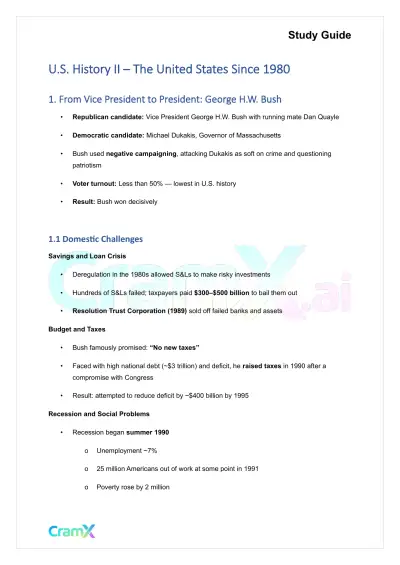 Quick Guides
U.S. History II - The United States Since 1980
History
16 pagesMar 2026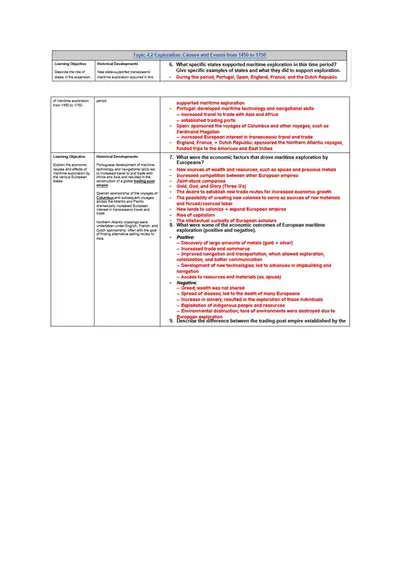 Solved Assignments
AP World History Unit 4 Study Guide (Transoceanic
History
14 pagesJun 2025 Solved Assignments
Liberty University CSTU 101 Quiz 3 Complete Solutions Correct Answers Key Four different versions
History
9 pagesMay 2025 Solved Assignments
Liberty University HIUS 221 Quiz 2 Complete Solutions Correct Answers Key
History
31 pagesMay 2025
Study this document with CramX
Once it is in your library, every tool can work from it.