

Test Bank For The Unfinished Nation: A Concise History Of The American People, 8th Edition
- History
- 392 pages
- Shared May 2025
Test Bank For The Unfinished Nation: A Concise History Of The American People, 8th Edition ensures you stay ahead with detailed explanations, topic summaries, and real exam-style questions.
Preview 16 of 392 pages
See the first 16 pages exactly as they appear in the document.
Page 1 Read page 1 as text
Chapter 01 The Collision of Cultures 1. The origins of the majority of human existence in North America began A . with migrations from Eurasia over the Bering Strait. B. with the explorations of Christopher Columbus. C. as a result of the development of the wheel. D. long after the last ice age ended. E. from the southern tip of South America. Accessibility: Keyboard Navigation Topic: America Before Columbus 2. Scholars estimate that human migration into the Americas over the Bering Strait occurred approximately A. 2,000 years ago. B. 5,000 years ago. C. 9,000 years ago. D . 11,000 years ago. E. 18,000 years ago. Accessibility: Keyboard Navigation Topic: America Before Columbus 3. The first truly complex society in the Americas was that of the A. Mayas. B. Aztecs. C. Incas. D. Pueblos. E . Olmec. Accessibility: Keyboard Navigation Topic: America Before Columbus 4. The pre - Columbian American peoples in the Pacific Northwest A. did not have permanent settlements. B. developed political systems as sophisticated as those of the Mayas and Aztecs. C . fished salmon as their principal occupation. D. were the most peaceful of pre - Columbian societies. E. were known as the Inuit. Accessibility: Keyboard Navigation Topic: America Before Columbus 5. The pre - Columbian North American peoples in the Southwest A. were primarily hunters of small game. B . built large irrigation systems for farming. C. lived in small, nomadic tribes. D. created an economy exclusively based on trade. E. primarily pursued moose and caribou for sustenance. Accessibility: Keyboard Navigation Topic: America Before Columbus 6. In the Great Plains region, most pre - Columbian societies A . engaged in sedentary farming. B. lived in small nomadic tribes. C. hunted buffalo for survival. D. used horses. E. developed a harsh religion that required human sacrifice. Accessibility: Keyboard Navigation Topic: America Before Columbus 7. Prior to European contact, the eastern third of what is today the United States
Page 2 Page 3 Read page 3 as text
A. was politically controlled by the Cahokia Indians. B. contained no permanent settlements. C . had the most abundant food resources of any region of the continent. D. was populated by tribes that engaged in hunting and gathering but did not yet farm. E. remained for the most part uninhabited. Accessibility: Keyboard Navigation Topic: America Before Columbus 8. Cahokia was a large trading center located near what present - day city? A . St. Louis B. Memphis C. New Orleans D. Baton Rouge E. Detroit Accessibility: Keyboard Navigation Topic: America Before Columbus 9. Many pre - Columbian tribes east of the Mississippi River were loosely linked by A. the shared use of a series of forts. B . common linguistic roots. C. economic compacts. D. intertribal religious festivals. E. the Iroquois Confederacy. Accessibility: Keyboard Navigation Topic: America Before Columbus 10. Native American religions were closely linked to A. the idea of apocalypse. B. human sacrifice. C. ideas of male dominance. D. visions from the world of spiri ts. E . the natural world. Accessibility: Keyboard Navigation Topic: America Before Columbus 11. Which statement best describes the role of women in pre - Columbian North American tribes? A. In some tribes, men took care of the children as the women tended the fields. B . In all tribes, women cared for the children and prepared meals. C. In no tribes did women participate in the social and economic organization of the tribe. D. In all tribes, both women and men engaged in hunting. E. In all tribes, women were responsible for farming. Accessibility: Keyboard Navigation Topic: America Before Columbus 12. Regarding knowledge of the Americas prior to the fifteenth century, most Europeans A. were aware of the travels of the Norse seaman Leif Eriksson in the eleve nth century. B. believed the Americas consisted of little more than several small islands. C . were entirely unaware of the existence of the Americas. D. assumed that the Americas were largely unpopulated. E. had only heard of America from the travels of Ma rco Polo. Accessibility: Keyboard Navigation Topic: Europe Looks Westward 13. In the late fifteenth century, the desire in Europe to look for new lands was spurred in part by A . significant population growth. B. the absence of a merchant class. C. the declining political power of many monarchs. D. the expansion of feudalism. E. a desire to escape the Black Death.
Page 4 Read page 4 as text
Accessibility: Keyboard Navigation Topic: Europe Looks Westward 14. The preeminent European maritime power in the fifteenth century was A. Spain. B . Portugal. C. France. D. the Netherlands. E. England. Accessibility: Keyboard Navigation Topic: Europe Looks Westward 15. Christopher Columbus A. was trained as a sailor through his long service to Italy. B. was a man of little ambition. C. believed that Asia could only be reached by sailing east. D. believed the Americas consisted of a few islands. E . thought the world was much smaller than it is in reality. Accessibility: Keyboard Navigation Topic: Europe Looks Westward 16. In his first v oyage in 1492, Christopher Columbus A. sailed along the coast of what is present - day Virginia. B . mistook Cuba for China. C. was briefly captured by natives he encountered. D. was forced to put down a mutiny on the Santa Maria . E. crossed the Atlantic Ocean in six weeks. Accessibility: Keyboard Navigation Topic: Europe Looks Westward 17. Christopher Columbus called the native people he encountered on his voyages “Indians” because A . he believed they came from the East Indies in the Pacific. B. it is what the natives called themselves. C. he mispronounced their actual name. D. Norse seamen had previously used the term. E. he wanted to hide his discovery from rival explorers. Accessibility: Keyboard Navigation Topic: Europe Looks Westward 18. As a result of his third voyage in 1498, Christopher Columbus concluded that A. all of the lands he had seen were in Asia. B. he had never come even remotely close to Asia. C . he had encountered a continent separate from Asia. D. Asia could not be reached by a ship traveling west from Europe. E. the lands he had discovered offered great mineral wealth. Accessibility: Keyboard Navigation Topic: Europe Looks Westward 19. Amerigo Vespucci A. sailed on the voyages with Christopher Columbus. B. was a leading critic of Columbus’s claims. C. hailed from Portugal. D. never traveled to the New World. E . helped spread recognition of the idea that the Americas were new continents. Accessibility: Keyboard Navigation Topic: Europe Looks Westward 20. Who was the first known European to look westward upon the Pacific Ocean, in 1513? A. Amerigo Vespucci B . Vasco de Balboa
Page 5 Read page 5 as text
C. Juan Ponce de León D. Ferdinand Magellan E. Hernando Cortés Accessibility: Keyboard Navigation Topic: Europe Looks Westward 2 1. What European explorer gave the Pacific Ocean its name? A. Amerigo Vespucci B. Vasco de Balboa C. Juan Ponce de León D . Ferdinand Magellan E. Hernando Cortés Accessibility: Keyboard Navigation Topic: Europe Looks Westward 22. Hernando Cortés’s conquest of the Aztecs in 1518 was made possible largely due to A . political divisions within the Aztec leadership. B. the exposure of the Aztecs to smallpox. C. the brutality of the Spanish conquistadores. D. Spanish alliances with enemies of the Aztecs. E. the Spanish co - opting the Aztec religion. Accessibility: Keyboard Navigation Topic: Europe Looks Westward 23. Which statement about Spanish settlements in the New World is FALSE? A. Spanish gold and silver mines were enormously productive. B. Spanish colonies would form one of the largest empires in the history of the world. C. The Catholic Church was very interested in spreading Christianity in Mexico. D . The first Spanish settlers were mostly interested in farming. E. Many helped establish elements of European civilization permanently in America. Accessibility: Keyboard Navigation Topic: Europe Looks Westward 24. An encomienda was a A. special title given to Spanish explorers of the New World. B. religious ceremony. C . Spanish - run community of assimilated Indians. D. uniform worn by conquistadores. E . license to exact tribute and labor from natives. Accessibility: Keyboard Navigation 25. The first permanent Spanish settlement in what is now the United States was A. New Orleans. B . St. Augustine. C. Santa Fe. D. St. Louis. E. San Francisco. Accessibility: Keyboard Navigation Topic: Europe Looks Westward 26. In 1680, the Pueblo Indians rose in revolt against Spanish settlers after the Spanish A. attempted to convert the Pueblos to Catholicism. B . made efforts to suppress Indian religious rituals. C. demanded tribute from the Indians. D. began to export Pueblos out of the colony to be sold as slaves. E. banned intermarriage between Spaniards and Pueblos. Accessibility: Keyboard Navigation Topic: Europe Looks Westward
Page 6 Read page 6 as text
27. To reduce conflicts, Spanish policy toward the Pueblo Indians in the eighteenth century involved all of the following EXCEPT A. intensified efforts at assimilating the Pueblos. B. a willi ngness to permit the Pueblos to own their own land. C. toleration of tribal religious rituals. D . an expansion of the encomienda system. E. a stop to the commandeering of Indian labor. Accessibility: Keyboard Navigation Topic: Europe Looks Westward 28. What factor is believed to have dramatically reduced New World native populations after contact with Europeans? A. war B . disease C. starvation D. enslavement E. religious conversion Accessibility: Keyboard Navigation Topic: Europe Looks Westward 29. In what way did sixteenth - century Europeans benefit from trade between the Americas and Europe? A. Food prices sharply rose as new crops flooded the European market. B. Health care improved as Indian medical practices were widely practiced in Europe. C . A lar ge number of new crops became available in Europe. D. Trade with the Americas ended future food shortages in Europe. E. Forced immigration of Indian slaves reduced labor shortages in Europe. Accessibility: Keyboard Navigation Topic: Europe Looks Westward 30. Which of the following was NOT introduced by Europeans to the New World? A. bananas B. pigs C. sugar D. horses E . corn Accessibility: Keyboard Navigation Topic: Europe Looks Westward 31. In Spanish colonial societies, mestizos A. were considered to be at the top of the social hierarchy. B . came to make up the largest segment of the population. C. were officially illegal but generally tolerated. D. were usually sold into slavery. E. was the name given to Catholic priests, friars, and missionaries. Accessibility: Keyboard Navigation Topic: Europe Looks Westward 32. Which of the following statements is most accurate regarding African immigrants to the Americas between 1500 and 1800? A. Almost all came against their will. B. They made up over half of all immigrants to the New World. C . Almost all came against their will, and they made up over half of all immigrants to the New World. D. Almost all came voluntarily, making up somewhat less than half of all immigrants to the New World. E. Almost all came voluntarily. Accessibility: Keyboard Navigation Topic: Europe Looks Westward 33. At the time of the beginning of the slave trade, most Africans A. were primitive peoples dominated by warring tribal societies. B. had little commercial contact with the Mediterranean world.
Page 7 Read page 7 as text
C. followed the Christian faith. D . had well - developed economies and political systems. E. had no important cities or trading centers. Accessibility: Keyboard Navigation Topic: Europe Looks Westward 34. African and American Indian so cieties tended to be matrilineal, which means A . people traced their heredity through their mothers. B. only women could be the heads of families. C. men could not inherit property. D. women were in control of the social institutions. E. only mothers could act as political leaders. Accessibility: Keyboard Navigation Topic: Europe Looks Westward 35. In the fifteenth century, slavery in Africa A. was considered a permanent condition for the enslaved individual. B. proscribed that children born of enslaved parents were also slaves. C. was introduced by Europeans. D. was made up of an exclusively African slave population. E . generally allowed certain legal protections for the enslaved. Accessibility: Keyboard Navigation Topic: Europe Looks Westward 36. In what chronological order, from earliest to latest, did European countries control the African slave trade? A . the Portuguese, the Dutch, the English B. the English, the Spanish, the Dutch C. the Dutch, the English, the Spanish D. the English, the Dutch, th e Portuguese E. the Portuguese, the Spanish, the Dutch Accessibility: Keyboard Navigation Topic: Europe Looks Westward 37. What condition(s) in England in the sixteenth century provided incentive for colonization? A . The availability of farmland was declining, while the population was growing. B. The demand for wool was declining, while the population was growing. C. Pasture land was being converted to crop production, while the population was declining. D. Both the food supply and the population were declining. E. Both the food supply and the population were increasing. Accessibility: Keyboard Navigation Topic: The Arrival of the English 38. Which statement regarding the economic theory of mercantilism is FALSE? A. It presumed that the world’s wealt h was finite. B. It increased competition among nations. C . It reduced the desire for nations to acquire and maintain colonies. D. It assumed that exporting goods was preferable to importing goods. E. Its principles spread throughout Europe in the sixteenth and seventeenth centuries. Accessibility: Keyboard Navigation Topic: The Arrival of the English 39. In England during the early sixteenth century, mercantilism thrived mostly on the basis of trade in which commodity? A. spices B. slaves C. lumber D. corn E . wool Accessibility: Keyboard Navigation
Page 8 Read page 8 as text
Topic: The Arrival of the English 40. In what way were Martin Luther and John Calvin important to English Puritans? A. These two men would help found the Massachusetts Bay Colony. B. Luther and Ca lvin encouraged the Puritans to leave England for the New World. C . Luther and Calvin advocated ideas of religious reform that influenced Puritan thought. D. They were the most influential English Puritans of the seventeenth century. E. Luther and Calvin helped to break the hold of predestination on the Puritan mind. Accessibility: Keyboard Navigation Topic: The Arrival of the English 41. The teachings of John Calvin A . produced a strong desire among his followers to lead lives that were virtuous. B. were most rapidly accepted in southern Europe. C. were officially adopted by the Church of England. D. were at odds with Catholic doctrines, but not with Catholic practices. E. helped to promote the doctrine of free will so vital to encouraging exploration . Accessibility: Keyboard Navigation Topic: The Arrival of the English 42. The English Reformation resulted from A. the threat of war between England and France. B . a political dispute between King Henry VIII and the Catholic Church. C. the rise of Lutheranism within the English church. D. the persecution by King James I of liberal priests. E. the defeat of the Spanish Armada. Accessibility: Keyboard Navigation Topic: The Arrival of the English 43. At the beginning of the seventeenth century, the a lready festering English Puritan discontent was increased by A. the suppression of English Catholics. B. the end of rule by the Stuarts. C. the rising influence of Quakers within the English church. D. Queen Elizabeth’s promotion of English theater. E . the death of Queen Elizabeth. Accessibility: Keyboard Navigation Topic: The Arrival of the English 44. England’s first experience with colonization came in A. North America. B. the Caribbean. C. Canada. D . Ireland. E. Africa. Accessibility: Keyboard Navigation Topic: The Arrival of the English 45. From their colonial experiences in Ireland, the English concluded that A. they should not try to convert indigenous peoples to English religious beliefs. B . English colonists should maintain rigid separatio n from an indigenous population. C. military expenditures were fiscally wasteful. D. indigenous populations were essential as the major colonial labor source. E. harsh treatment of indigenous populations could lead to rebellion. Accessibility: Keyboard Na vigation Topic: The Arrival of the English 46. Which statement about French colonization in the New World is FALSE? A. French settlers exercised an influence disproportionate to their numbers. B . The French, like the English, tried to remain separate from native peoples.
Page 9 Read page 9 as text
C. The French were more likely than the English to press inland. D. The French colonial economy was based on an extensive fur trade. E. The French often lived among the natives and married Indian women. Accessibility: Keyboard Navigation Topic: The Arrival of the English 47. The first permanent English settlement in the New World was established in A. Boston. B. Raleigh. C. Roanoke. D. Plymouth. E . Jamestown. Accessibility: Keyboard Navigation Topic: The Arrival of the English 48. One important consequence of the defeat of the Spanish Armada was that A. France came to dominate Spain. B. Catholicism was swept from western Europe. C . England found the seas more open to their control. D. the Reformation extended into Spain. E. Spain was fo rced to relinquish its New World empire. Accessibility: Keyboard Navigation Topic: The Arrival of the English 49. The colony of Virginia was named in honor of A. Virginia Dare. B. Walter Raleigh. C. Humphrey Gilbert. D . Elizabeth I. E. Queen Mary. Accessibility: Keyboard Navigation Topic: The Arrival of the English 50. The cause of the failure of the Roanoke colony A. was a severe food shortage. B . is historically inconclusive. C. deterred the English from another colonizing effort for forty years. D. was the death of the colony’s governor. E. was a virulent malarial epidemic. Accessibility: Keyboard Navigation Topic: The Arrival of the English 51. The civilizations and political systems of pre - Columbian Native Americans north of Mexico were less elaborate than those of the peoples to the south. TRUE Accessibility: Keyboard Navigation Topic: America Before Columbus 52. The eleventh - century explorations and discoveries of Leif Eriksson were common knowledge in the European world of the fifteenth century. FALSE Accessibility: Keyboard Navigation Topic: Europe Looks Westward 53. Portuguese exploration in the late fifteenth century concentrated on finding a route to the Orient by sailing around Africa. TRUE Accessibility: Keyboard Navigation Topic : Europe Looks Westward
Page 10 Read page 10 as text
54. Christopher Columbus spent his early seafaring years in the service of the Portuguese. TRUE Accessibility: Keyboard Navigation Topic: Europe Looks Westward 55. On his first voyage to the New World, Columbus realized that he had not encountered China. FALSE Accessibility: Keyboard Navigation Topic: Europe Looks Westward 56. By 1550, Spaniards had explored the coast of North America as far north as Oregon in the west. TRUE Accessibility: Keyboard Navigation Topic: Europe Looks Westward 57. The early Spanish settlers were successful at establishing plantations, but not at finding gold or silver. FALSE Accessibility: Keyboard Navigation Topic: Europe Looks Westward 58. Spanish mines in America yielded ten times as much gold and silver as the rest of the world’s mines together. TRUE Accessibility: Keyboard Navigation Topic: Europe Looks Westward 59. The Pueblo Indians continued to practice their native religious rituals, even though many of them converted to Christianit y. TRUE Accessibility: Keyboard Navigation Topic: Europe Looks Westward 60. By the seventeenth century, the Spanish had given up their efforts to assimilate the Indians to Spanish ways. FALSE Accessibility: Keyboard Navigation Topic: Europe Looks Westward 61. European life was relatively unchanged by the biological and cultural exchanges that took place after discovery of the New World. FALSE Accessibility: Keyboard Navigation Topic: Europe Looks Westward 62. As of the sixteenth century, Europeans had generally built up a greater immunity to smallpox than had the Native Americans. TRUE Accessibility: Keyboard Navigation Topic: Europe Looks Westward 63. Owing to their commitment to Catholicism, male Spanish immigrants had very little sexual contact with Indian women. FALSE Accessibility: Keyboard Navigation Topic: Europe Looks Westward 64. Depending on the area, Spanish colonists either enslaved Indians or forced them to work for fixed periods, unable to leave without the consent of their employers. TRUE
Page 11 Read page 11 as text
Accessibility: Keyboard Navigation Topic: Europe Looks Westward 65. Cattle, sheep, and sugar were three New World products introduced to Europe. FALSE Accessibility: Keyboard Navigation Topic: Europe Looks Westward 66. In contrast with the European tradition, African families tended to be matrilineal. TRUE Accessibility: Keyboard Navigation Topic: Europe Looks Westward 67. The internal African slave trade was not well established until Europeans began to demand slave labor for th e New World. FALSE Accessibility: Keyboard Navigation Topic: Europe Looks Westward 68. During the sixteenth century, England was experiencing a decline in the food supply and population. FALSE Accessibility: Keyboard Navigation Topic: The Arrival of the English 69. The preaching of John Calvin led his followers to lead both anxious and productive lives. TRUE Accessibility: Keyboard Navigation Topic: The Arrival of the English 70. Puritans were the first English colonizers. FALSE Accessibility: Keyboard Navigation Topic: The Arrival of the English 71. The Roanoke disaster virtually killed the colonizing impulse in England for a long time. FALSE Accessibility: Keyboard Navigation Topic: The Arrival of the English 72. Compare the Indian civilizations north of Mexico with those in Central and South America. Topic: America Before Columbus 73. Discuss the benefits and drawbacks for European and American societies resulting from contact and the trade that developed after 1500. Topic: Europ e Looks Westward 74. What motivated Europeans to establish settlements in the New World? What made it possible for them to undertake those settlements? Topic: Europe Looks Westward 75. How did Spanish settlements and attitudes toward native populations in the New World differ from those of the English? Topic: Europe Looks Westward Topic: The Arrival of the English 76. Discuss the economic and religious factors critical to English colonization. Topic: The Arrival of the English
Page 12 Read page 12 as text
Category # of Questions Accessibility: Keyboard Navigation 71 Topic: America Before Columbus 13 Topic: Europe Looks Westward 43 Topic: The Arrival of the English 20
Page 13 Read page 13 as text
Chapter 02 Transplantations and Borderlands 1. Which of the following does NOT describe the site chosen for the Jamestown settlement? A. It was low and swampy and subject to outbreaks of malaria. B. It was inland so as to offer security from natives. C. It bordered the territories of powerful Indian tribes. D. It was surrounded by thick woods. E . It was inaccessible by ship. Accessibility: Keyboard Navigation Topic: The Early Chesapeake 2. The initial Jamestown colonists focused primarily on A. the long - term success of the settlement. B. building a family - centered community. C. developing peaceful relations with the Indians in the area. D . the search for gold. E. converting the local Indians to Christianity. Accessibility: Keyboard Navigation Topic: The Early Chesapeake 3. Captain John Smith helped the Jamestown settlement survive by A. waging all - out war with the local Indians. B. dividing decision - making authority among the colonists to improve morale. C . imposing work and order on the colonists. D. introducing tobacco to the colonists. E. importing African slaves to rebuild the fort. Accessibility: Keyboard Navigation Topic: The Early Chesapeake 4. The “starving time” in Jamestown during the winter of 1609 – 1610 was partly the result of A . major fires that ravaged surrounding crop lands. B. the extermination of the Indians who used to grow crops. C. an influx of rats from settlers’ ships that ate much of the stored grains. D. a drought that led to crop failures. E. the sinking of the colonists’ su pply ship in the Atlantic. Accessibility: Keyboard Navigation Topic: The Early Chesapeake 5. The first profitable economic development in Jamestown resulted from A. the discovery of gold and silver. B. fur trade with the Indians. C . the production of tobacco. D. development of fisheries and lumber. E. the cultivation of cotton. Accessibility: Keyboard Navigation Topic: The Early Chesapeake 6. The cultivation of tobacco around Jamestown resulted in all the following EXCEPT A. the rapid wearing out of the soil. B. the search for new sources of labor. C. rising prosperity for the colony. D . improved relations with the local Indians. E. the expansion of European settlement into the interior. Accessibility: Keyboard Navigation Topic: The Early Chesapeake 7. The Virginia Company developed the “headright” system to A . attract new settlers to the colony.
Page 14 Read page 14 as text
B. discourage poor people from moving to the colony. C. require families to migrate together. D. raise revenue from the sale of land. E. cause conflict amon g the neighboring Indian tribes. Accessibility: Keyboard Navigation Topic: The Early Chesapeake 8. Which of the following statements best characterizes the first years of Jamestown’s existence? A. A majority of its colonists enjoyed significant economic success. B. The settlement was often assaulted by Spanish invaders. C. The settlement was notable for its peaceful relations with local Indians. D. The settlement was notable for its toleration of political freedom. E . The settlement survived despite an en ormous loss of life. Accessibility: Keyboard Navigation Topic: The Early Chesapeake 9. When the House of Burgesses was created in Virginia in 1619, A. it gave settlers full political control of their colony. B. landowning women colonists were allowed to vote. C . colonists were given a share of local political representation. D. it put an end to a violent uprising by disgruntled colonists. E. it recommended that Virginia declare independence from England. Accessibility: Keyboard Navigation Topic: The Earl y Chesapeake 10. The first blacks imported to Virginia in 1619 A . may have been considered indentured servants by the colonists. B. sparked an immediate rapid stream of African slaves to the British colonies. C. were preferred to European indentured servants. D. followed Indians into slavery. E. arrived as independent landowners. Accessibility: Keyboard Navigation Topic: The Early Chesapeake 11. The Powhatan Indian Pocahontas A. married Englishman John Smith. B. was kidnapped by John Rolfe. C . created an interest in England in “civilizing” Indians. D. was the cause of a war between the Powhatan Indians and Virginian colonists. E. refused to convert to Christianity. Accessibility: Keyboard Navigation Topic: The Early Chesapeake 12. Warfare between Englishmen and Powhatan Indians in Virginia A. continued without interruption until the early eighteenth century. B. was first triggered by the kidnapping of Pocahontas. C. was primarily a result of religious tensions betwe en natives and settlers. D. was uncommon until the early eighteenth century. E . included an Indian attack on Jamestown that killed hundreds of colonists. Accessibility: Keyboard Navigation Topic: The Early Chesapeake 13. The Virginia Company A. never sanctioned military action against the Native Americans of Virginia. B. deeply opposed the importation of Africans to the colonies. C. was absorbed by the crown because it was becoming too powerful. D . had its charter revoked by James I. E. found most of i ts Virginia ventures to be very profitable. Accessibility: Keyboard Navigation
Page 15 Read page 15 as text
Topic: The Early Chesapeake 14. In its beginning, the Maryland colony A. experienced tremendous warfare with local Indians. B. allowed no Protestant settlers. C . was a refuge for English Catholics. D. was led by Captain John Smith. E. experienced considerable conflict with nearby French settlers. Accessibility: Keyboard Navigation Topic: The Early Chesapeake 15. Which of the following statements regarding Sir William Berkeley is FALSE? A. He was a dominant political figure in Virginia for more than three decades. B. He encouraged Virginia to develop westward. C. His relations with Indians were violent and bloody. D . He extended political representation for frontier settlers. E. He sent explorers across the Blue Ridge Mountains. Accessibility: Keyboard Navigation Topic: The Early Chesapeake 16. By 1670, political representation for colonists in Virginia A. involved elections taking place every two years. B. was open to all white men over the age of twenty - one. C . had grown more restrictive. D. favored western counties over eastern counties. E. expanded to include landholding black men. Accessibility: Keyboard Navigation Topic: The Early Chesapeake 17. Bacon’s Rebellion A. spelled the demise of the Virginia Company. B. saw the royal governor of Virginia forced to resign. C. spread throughout several colonies. D. carried on for several years. E . was a conflict between eastern and western political forces in Virginia. Accessibility: Keyboard Navigation Topic: The Early Chesapeake 18. The suppression of Bacon’s Rebellion helped spur A. tobacco production. B . slavery in Virginia. C. European investment. D. the triangular trade. E. calls for independence from England. Accessibility: Keyboard Navigation Topic: The Early Chesapeake 19. In 1608, Puritan Separatists that left England A. sought refuge in Virginia. B. emigrated quietly to northern France. C. were encouraged by the Church of England to emigrate. D. chartered a colony in Plymouth. E . could not legally do so without the king’s permission. Accessibility: Keyboard Navigation Topic: The Growth of New England 20. In 1620, the Puritan Pilgrims who came to North America A. intended to settle at Cape Cod. B. came over the objections of the Virginia colony. C. were seeking to escape military service in England.
Page 16 Read page 16 as text
D . hoped to create their ideal close - knit Christian community. E. enjoyed a particularly mild winter their first year. Accessibility: Keyboard Navigation To pic: The Growth of New England 21. During the early years, the survival and growth of the Plymouth colony A . was due in large part to the assistance of the natives. B. led the colonists to grow rich from the surrounding productive farmlands. C. saw the colonists carry out warfare that wiped out much of the local Indian population. D. nevertheless saw two - thirds of its population die. E. was critically important for trade routes with Jamestown to the south. Accessibility: Keyboard Navigation Topic: The G rowth of New England 22. King Charles I’s treatment of Puritans could be characterized as A. relatively tolerant. B . extremely hostile. C. governed by economic motives. D. more likely to advance Puritan thought in England. E. unlikely to involve imprisonment for religious beliefs. Accessibility: Keyboard Navigation Topic: The Growth of New England 23. The Puritan merchants who founded the Massachusetts Bay colony A. established their capital in Salem. B. took over what had been a royal colony. C . were led by Miles Standish. D. were given their colonial charter by Charles II. E . carried out the largest single migration in the seventeenth century. Accessibility: Keyboard Navigation Topic: The Growth of New England 24. The Massachusetts Bay Puritans A. lived as grim and joyless people. B. took vows of poverty as evidence of their commitment to their faith. C . created a colonial “theocracy.” D. fought with the surrounding Indians almost immediately. E. introduced freedom of worship to the New World. Accessibility: Keyboard Navigation Topic: The Growth of New England 25. The Puritan founders in Massachusetts who described their colony as a “city upon a hill” A . felt they were creating a holy community that would be a model for the world. B. wanted to construct their community on high ground to save it from Indian attacks. C. wanted to create a community that would be open to all peoples of all faiths. D. sought to create a community in which all people were treated as equals. E. wanted to dif ferentiate their community from the materialism and acquisitiveness of New Haven. Accessibility: Keyboard Navigation Topic: The Growth of New England 26. Thomas Hooker is associated with establishing the colony of A. Rhode Island. B. Vermont. C. New Hampshire. D . Connecticut. E. Maine. Accessibility: Keyboard Navigation Topic: The Growth of New England
376 more pages in the full document
Unlock it once and it stays in your library, ready to chat with or turn into flashcards.
Unlock the full documentMore History study materials
See all Exam Guides
Test Bank For Visions of America: A History of the United States, Combined Volume 2nd Edition Test Bank
History
1084 pages111downloadsFeb 2025 Exam Guides
Cengage Advantage Books: Making America, Volume 1 To 1877: A History Of The United States, 7th Edition Test Bank
History
170 pages60downloadsFeb 2025 Exam Guides
Test Bank for The American Journey: A History of the United States, Combined Volume, 8th Edition
History
447 pagesMay 2025 Exam Guides
Palmer, A History of Europe in the Modern World, 11th Edition Test Bank
History
766 pagesMay 2025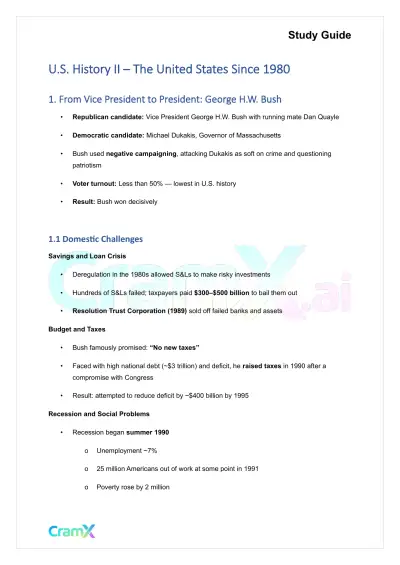 Quick Guides
U.S. History II - The United States Since 1980
History
16 pagesMar 2026 Solved Assignments
AP World History Unit 4 Study Guide (Transoceanic
History
14 pagesJun 2025 Solved Assignments
Liberty University CSTU 101 Quiz 3 Complete Solutions Correct Answers Key Four different versions
History
9 pagesMay 2025 Solved Assignments
Liberty University HIUS 221 Quiz 2 Complete Solutions Correct Answers Key
History
31 pagesMay 2025
Study this document with CramX
Once it is in your library, every tool can work from it.