
Astronomy Notes, Questions, and Study Resources

academic
55 resources

Astronomy is the study of the universe beyond Earth’s atmosphere, including stars, planets, galaxies, and other celestial objects. It explores how these systems form, evolve, and interact, helping us understand the origins of the universe and our place within it.

On CramX, you can explore a wide range of astronomy resources, including study notes and learning materials, practice questions with explanations, and flashcards for quick revision. These resources are designed to support coursework and exam preparation.

Astronomy combines concepts from physics, mathematics, and chemistry to explain phenomena such as planetary motion, stellar evolution, black holes, and the structure of galaxies. Students learn how the universe is organized, from our solar system to large-scale cosmic structures.

The subject also introduces ideas from astrophysics and cosmology, helping explain topics such as the Big Bang, the expansion of the universe, and the life cycle of stars.

Key areas you can study:

  • Solar system and planetary motion
  • Stars, stellar evolution, and supernovae
  • Galaxies and large-scale cosmic structures
  • Astrophysics and gravitational phenomena
  • Cosmology and the origin of the universe

You may also find useful resources in related subjects such as Physics, Mathematics, and Earth Science.

Recent Astronomy Documents

Browse all Astronomy Documents

Explore the latest Astronomy notes, study materials, and exam resources. These documents help you understand key concepts and prepare effectively for coursework and exams. These resources cover essential topics, key concepts, and commonly studied areas within Astronomy. Latest Astronomy documents include notes, assignments, and practice materials from various courses and universities.

Most Popular Astronomy Documents

Explore All Astronomy Documents

Explore the most popular Astronomy notes, study materials, and solution manuals trusted by students. Ranked based on student ratings, downloads, and engagement.

Recent Astronomy Flashcards

Explore All Astronomy Flashcards

Explore recently created Astronomy flashcard decks that simplify complex topics and support quick revision and active recall. Browse interactive flashcard decks created by students to help with Astronomy revision and exam preparation. Perfect for quick revision and spaced repetition learning.

Recent Astronomy Questions & Answers

Explore All Astronomy Answers

Explore recently answered Astronomy questions, including step-by-step solutions and explanations to support your learning and exam preparation. These questions cover important topics, concepts, and real-world problems commonly asked in Astronomy courses and exams. Perfect for homework help, quick problem-solving, and concept clarification. New questions and answers are added regularly to keep content fresh and relevant.

Question:

How long would it take to travel 7 trillion miles in space?

Solution
Homework
10 months ago
View Answer
Question:

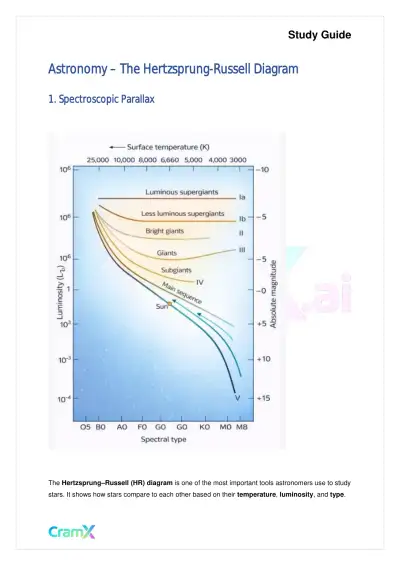
What type of star has a low temperature and a low luminosity?

Solution
Homework
10 months ago
View Answer
Question:

What type of star has a high temperature but a low luminosity?

Solution
Homework
10 months ago
View Answer
Question:

"Which stars have low temperatures and high luminosities? A. Red giants B. White dwarfs C. Main sequence stars"

Solution
Homework
10 months ago
View Answer
Question:

What are the Sun's 7 layers in order, starting with the innermost core?

Solution
Homework
10 months ago
View Answer
Question:

How does the interstellar medium affect our view of most of the galaxy? It prevents us from seeing most of the galactic disk with visible and ultraviolet light. It produces so much visible light that it blocks our view of anything beyond it. It has no effect on visible-light observations, but prevents us from studying the galactic center with radio waves or x -rays. It absorbs all wavelengths of light.

...
Solution
Homework
10 months ago
View Answer
Question:

"Match each event with its description. A. Full moon: The moon is on the side of Earth opposite the sun. B. New moon: The moon is not visible to observers on Earth. C. Lunar eclipse: The moon is in Earth's shadow. D. Solar eclipse: The Earth is in the moon's shadow."

Solution
Homework
10 months ago
View Answer
Question:

How bright is a magnitude +3.0 star compared to a magnitude +4.0 star? A. 4/3 (1.333) times brighter B. 10 times brighter C. 2.512 times brighter D. 1/2.512 times as bright

Solution
Homework
10 months ago
View Answer

Explore Related Subjects and Topics

Discover related subjects and academic topics connected to Astronomy. Explore study materials, notes, flashcards, and questions across multiple disciplines. These subjects share important concepts with Astronomy and can help you build a broader understanding. Browse study materials, documents, flashcards, and answers across these subjects.

Astronomy Study Materials from Top Universities

View All Universities

Explore Astronomy study materials, notes, and documents from top universities and institutions. Access resources created by students and educators from leading academic programs. These universities offer a wide range of Astronomy resources across different courses and levels of study. Trusted by students from universities worldwide. Browse documents, notes, and study materials from these universities.