

Subject
World Languages study materials
World languages refer to languages spoken across different regions that are commonly learned to support global communication.
Shared by students: 88 documents and 5 flashcard decks.
Most used World Languages documents
All 88 Certification Guides
Korean Conversations and Debating: A Language Guide for Self-Study or Classroom Use (2023)
195 pages99downloadsFeb 2025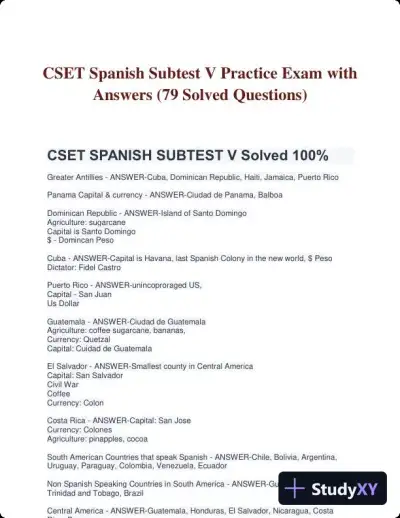 Past Exams
CSET Spanish Subtest V Practice Exam with Answers (79 Solved Questions)
7 pages68downloadsFeb 2025 Textbook Guides
Solution Manual for Atando cabos: Curso intermedio de español, 5th Edition
411 pages51downloadsFeb 2025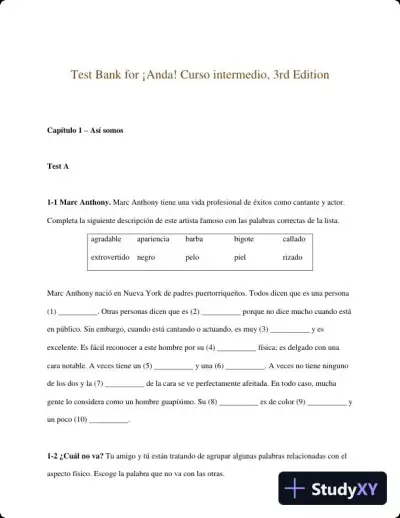 Exam Guides
Test Bank for ¡Anda! Curso intermedio, 3rd Edition
1004 pages42downloadsFeb 2025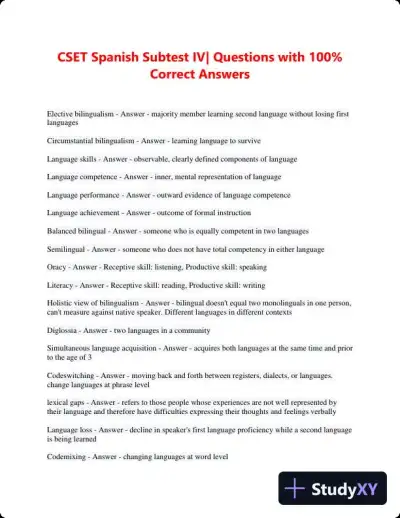 Past Exams
CSET Spanish Subtest IV Practice Exam with Answers (89 Solved Questions)
6 pages40downloadsFeb 2025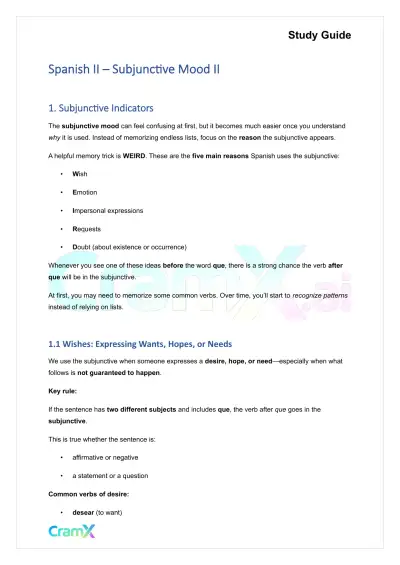 Quick Guides
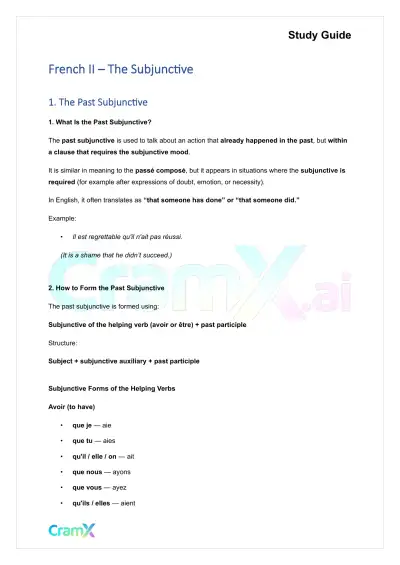
Spanish II - Subjunctive Mood II
9 pagesMar 2026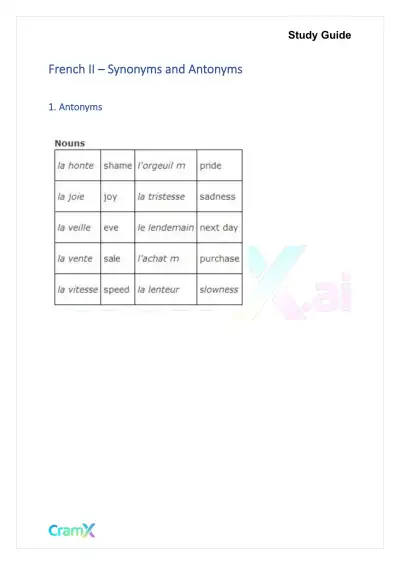 Quick Guides
French II – Synonyms and Antonyms
9 pagesMar 2026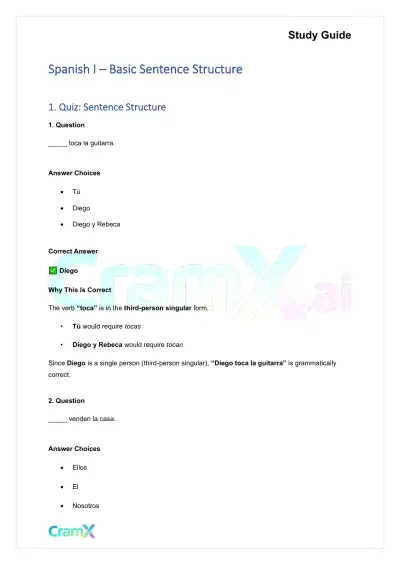 Quick Guides
Spanish I - Basic Sentence Structure
14 pagesMar 2026
Flashcard decks
All decksRecently shared
See newest
Where students share World Languages material
About World Languages
World languages refer to languages spoken across different regions that are commonly learned to support global communication. Studying these languages helps people connect across cultures in areas such as education, business, travel, and international collaboration.
On CramX, you can explore a wide range of world language resources, including study notes and learning materials and flashcards for vocabulary and revision. These resources are designed to support language learning at different levels.
Learning a language involves more than vocabulary and grammar. Students also develop skills in reading, writing, listening, and speaking, while gaining insight into cultural contexts and communication styles. Commonly studied languages include English, Spanish, French, Arabic, and many others used around the world.
Language learning can improve communication skills, critical thinking, and cultural awareness, while also opening opportunities in fields such as business, healthcare, education, and technology.
Key areas you can study:
- Vocabulary building and grammar structures
- Reading, writing, listening, and speaking skills
- Pronunciation and conversational practice
- Cultural context and language usage
- Language exercises and exam preparation
Whether you're learning a new language for school, travel, or career development, these resources provide structured support to help you build fluency and confidence.